Friday, October 29, before breakfast
The Village Newspaper Ritual
Every Friday, the residents of [Chipping Cleghorn](entity:location-recall-location-chipping-cleghorn-d9191f0f31e1) turn from the national headlines to the local Gazette, whose personal column carries the small community’s bargains, grievances, and private notices. The routine establishes how news travels through the village—and how an advertisement can summon its readers without a conventional invitation.
As the paper circulates from house to house, its apparently ordinary listings become the stage for an announcement that will draw the villagers to [Little Paddocks](entity:location-recall-location-little-paddocks-9629829e7b95) that evening.
Friday, October 29, morning
The Murder Advertisement
At breakfast, [Mrs Swettenham](entity:character-recall-character-mrs-swettenham-af56ab390a6b) discovers a notice stating that a murder will take place at [Little Paddocks](entity:location-recall-location-little-paddocks-9629829e7b95) at 6:30 that evening, and reads it aloud to Edmund. He guesses it is a [Murder Game](entity:concept-recall-concept-murder-game-d48f12d170b8), while his mother wonders whether the unusual wording is an invitation; she decides that she will go and insists that Edmund accompany her.
The notice is startling precisely because it appears in the village paper rather than arriving privately. Its open invitation promises a spectacle, and the neighbors’ curiosity soon turns the advertisement into an audience for a real crime.
Friday, October 29, morning
The Easterbrooks Decide to Attend
[Laura Easterbrook](entity:character-recall-character-laura-easterbrook-10cbf298e24c) reads the advertisement to her husband, Archie, while he is absorbed in a political article. He recognizes the proposed entertainment as a [Murder Game](entity:concept-recall-concept-murder-game-d48f12d170b8) and describes the usual roles and staged blackout, presenting himself as an authority on police procedure.
At first Archie refuses to attend, but Laura persuades him that the hostess may need his experience to make the event succeed. His confidence in his own judgment will later sit uneasily beside the unreliable assumptions shared by the assembled witnesses.
Friday, October 29, morning
Hinchcliffe’s Practical Response
At [Boulders](entity:location-recall-location-boulders-61bd0daa7c5f), [Amy Murgatroyd](entity:character-recall-character-amy-murgatroyd-9e335ebeee9a) brings the notice to [Miss Hinchcliffe](entity:character-recall-character-miss-hinchcliffe-ed2d3a47329e) while the latter tends the poultry. Amy wants an authoritative explanation; Hinchcliffe dismisses the announcement as foolish and suggests that they will discover its meaning when they arrive.
Hinchcliffe’s blunt practicality contrasts with Amy’s uncertainty, but the two women agree to attend. Their different temperaments later shape how they interpret the blackout and how the crucial memory is recovered.
Friday, October 29, morning
Bunch Reads the Notice
At breakfast, [Diana Harmon](entity:character-recall-character-diana-harmon-33d6c37b4a7d) finds the murder announcement among the Gazette’s miscellaneous notices and tells her husband, Julian. She is delighted by the prospect of a real-life mystery, though she fears being chosen as the victim in a dark-room game; Julian cannot attend because he has confirmation preparations.
Bunch’s open enthusiasm brings warmth and comedy to the gathering that evening. Her habit of speaking plainly, even when others are performing indifference, will also make her an important companion to [Jane Marple](entity:character-recall-character-jane-marple-a9e79c053cbb).
Friday, October 29, breakfast
The Notice Reaches Little Paddocks
At [Little Paddocks](entity:location-recall-location-little-paddocks-9629829e7b95), [Dora Bunner](entity:character-recall-character-dora-bunner-55a52d4f5676) finds the advertisement and draws it to [Letitia Blacklock](entity:character-recall-character-letitia-blacklock-19ae43da95b5)’s attention. Letitia immediately asks whether Patrick devised it, but Patrick denies responsibility; Julia is equally dismissive, and the household cannot explain who placed the notice.
The announcement unsettles Dora, who senses that it is spiteful rather than amusing. Letitia tries to reassure her and predicts that curious neighbors will arrive at half past six, yet the question of who arranged the spectacle remains uncomfortably close to home.
Friday, October 29, morning
Dora Senses a Threat
Later, Letitia sits drawing on her blotter while Dora asks whether the announcement has frightened her. Letitia initially denies being worried, but acknowledges that the notice is not a nice joke when Dora insists that it feels dangerous.
Their exchange reveals both Dora’s devotion and her instinctive sensitivity beneath her muddled manner. She recognizes Letitia’s unease before Letitia will admit it, a perception that will later make Dora dangerous to the secret at the heart of the case.
Friday, October 29, late morning
Mitzi Threatens to Leave
[Mitzi](entity:character-recall-character-mitzi-3940081c7153) storms in announcing that she intends to leave because the advertisement seems to predict her murder. She invokes the violence she has fled in Europe and imagines that Nazis or Bolsheviks have found her again; Letitia points out that a genuine assassin would hardly advertise a victim in advance.
Letitia calms her by redirecting the conversation to lunch and the evening’s visitors. Mitzi remains frightened but agrees to cook, and the household’s precarious normality resumes around a threat that nobody yet understands.
Friday, October 29, late afternoon
Preparations for the Gathering
At [Little Paddocks](entity:location-recall-location-little-paddocks-9629829e7b95), Letitia arranges drinks and flowers in the drawing-room, whose two former rooms have been opened into one. She has the central heating running because the house has been damp, and the guests joke about the comforts and shortages of the post-war years.
Letitia wants the neighbors to find the refreshments without seeing that she has expected them. She asks Patrick to move the tray into the bay window and replaces an old, opened bottle of sherry with a new one, an apparently minor precaution that underscores how carefully she is managing the evening.
Friday, October 29, shortly before 6:30 p.m.
Phillipa Learns of the Party
[Phillipa Haymes](entity:character-recall-character-phillipa-haymes-d720e4c31646) enters the drawing-room unaware that a gathering is expected and asks whether a party is taking place. Patrick turns the room’s flowers and food into mock funeral decorations, while Dora calls the announcement a nasty joke.
Letitia refuses offers to shut up the ducks herself, preferring to handle the task personally. The household’s playful talk about death continues as the clock approaches the advertised hour, masking the practical arrangements that will make the staged entrance possible.
Friday, October 29, around 6:20 p.m.
The Neighbors Arrive
Colonel and Mrs Easterbrook arrive first, followed by [Miss Hinchcliffe](entity:character-recall-character-miss-hinchcliffe-ed2d3a47329e) and [Amy Murgatroyd](entity:character-recall-character-amy-murgatroyd-9e335ebeee9a), then [Mrs Swettenham](entity:character-recall-character-mrs-swettenham-af56ab390a6b) and Edmund, and finally [Bunch Harmon](entity:character-recall-character-bunch-harmon-925c207488b6). Each visitor pretends to have dropped in by chance, though the repeated comments about the central heating and chrysanthemums expose their shared curiosity.
The room fills with people who expect a harmless performance. Patrick goes to fetch the sherry, while Letitia stands near the archway with the cigarettes; the scattered positions of the guests will later complicate their memories of what happened in the dark.
Friday, October 29, 6:30 p.m.
The Clock Strikes Half Past Six
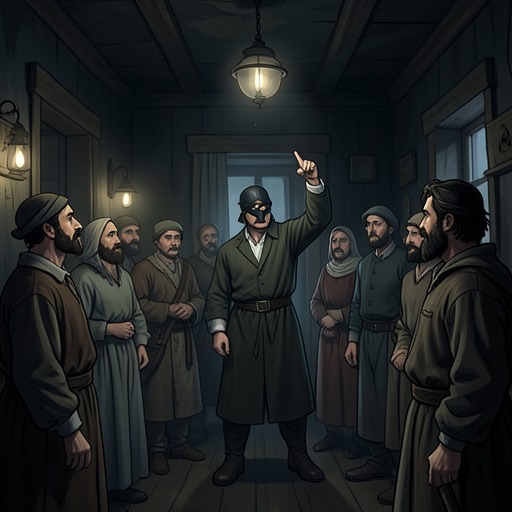
As the mantel clock chimes the half hour, the guests fall silent. When the last note dies away, the lights fail throughout the drawing-room and hall.
The timing makes the blackout seem like the promised beginning of a game, and the visitors’ anticipation gives the unseen intruder a moment of advantage. In the darkness, the distinction between play and genuine danger disappears almost instantly.
Friday, October 29, immediately after 6:30 p.m.
The Masked Intruder
A door swings open and a powerful flashlight sweeps across the drawing-room. A hoarse voice orders the guests to put their hands up, and many comply, still thinking that the event is a carefully staged [Murder Game](entity:concept-recall-concept-murder-game-d48f12d170b8).
Two revolver shots shatter that confidence. The figure in the doorway turns, hesitates, and falls after a third shot; the flashlight drops and the drawing-room door swings shut behind him. The guests are left in darkness with a real casualty and no reliable view of the shooter.
Friday, October 29, moments after the shots
Blood in the Hall
The guests call for lights and lighters. Letitia stands by the archway with blood running over her hand and neck, while [Mitzi](entity:character-recall-character-mitzi-3940081c7153) screams from the locked dining-room; Patrick mutters that her survival is no blessing, and the others try to regain control.
The Colonel and Edmund find the fallen intruder in the hall and release Mitzi. Candlelight reveals that Letitia’s ear has been grazed and that the masked young man is dead, his body and the nearby revolver smeared with blood. The case begins as an apparent failed robbery or suicide, though the confused scene invites competing interpretations.
Friday, October 29, shortly after the shooting
The Dead Man Identified
Once the lights return, the Colonel removes the dead man’s mask. Dora recognizes him as the young man who had visited Letitia recently asking for money to return to Switzerland, and suggests that his earlier visit may have been a pretext to inspect the house.
Letitia calmly assigns practical tasks: Phillipa looks after Dora, Julia fetches sticking plaster, and Patrick calls the police. Her composure impresses the neighbors, even as the circumstances surrounding the dead visitor and the advertised murder remain unexplained.
The morning after October 29
Craddock Takes the Case
Chief Police Officer George Ritzdale listened to Detective Chief Inspector Demott Claddock's initial report: the deceased was Swiss Rudolf Schellz, employed at the Royal Hot Springs Hotel. Claddock intended to first investigate the hotel, then proceed to Chipping Clee Hanger; meanwhile
The morning after October 29
Scherz’s Hotel Record
At the [Royal Spa Hotel](entity:location-recall-location-royal-spa-hotel-d1c88bd9caf2), the manager admits that Scherz was not entirely satisfactory. He had mishandled bills and may have taken small sums, although an audit had failed to prove a shortage; the manager had suspected dishonesty but lacked firm evidence.
A waitress, [Myrna Harris](entity:character-recall-character-myrna-harris-950d3c160f46), says Scherz talked grandly of wealthy Swiss parents and Alpine exploits, though his clothes and finances did not support the stories. She recalls that he asked about bus times but cannot place the destination with certainty, leaving Craddock with a picture of a petty opportunist whose apparent leap to armed violence does not fit his habits.
The day after October 29
Fletcher Examines Little Paddocks
Craddock reaches [Little Paddocks](entity:location-recall-location-little-paddocks-9629829e7b95) and hears [Sergeant Fletcher](entity:character-recall-character-sergeant-fletcher-18f9747f386a)’s findings: Scherz wore gloves, left no useful fingerprints, and seems to have entered without forcing a door. The house’s old wiring could have allowed a single circuit to fail, but the officers cannot yet explain how it happened.
Fletcher suspects [Mitzi](entity:character-recall-character-mitzi-3940081c7153) might have helped the intruder, partly because she is a refugee and because the front-door accounts conflict. Craddock notices the household’s open-door habits and begins interviewing the residents, wary that the apparent simplicity of the case conceals something more deliberate.
The day after October 29
Letitia’s Account of Scherz
Letitia tells Craddock that Scherz first approached her at the [Royal Spa Hotel](entity:location-recall-location-royal-spa-hotel-d1c88bd9caf2), falsely claiming that his father owned a hotel where she had once stayed. He later appeared at [Little Paddocks](entity:location-recall-location-little-paddocks-9629829e7b95) seeking money for his supposedly ill mother; Letitia refused, believing the story dishonest.
She remembers him inspecting the dining-room and the front-door fastening as he left. Although she thinks he may have been surveying the house, she cannot see why anyone would stage an elaborate robbery for a few pounds and modest possessions. Dora insists that Scherz deliberately meant to kill Letitia, but Letitia rejects the theory.
The day after October 29
The Household Under Question
Craddock learns that Patrick and Julia are distant cousins staying as paying guests, while Phillipa lives at [Little Paddocks](entity:location-recall-location-little-paddocks-9629829e7b95) because she works at [Dayas Hall](entity:location-recall-location-dayas-hall-931f9282abf6). Letitia describes [Mitzi](entity:character-recall-character-mitzi-3940081c7153) as difficult, suspicious, and prone to exaggeration, but also as a frightened refugee who deserves sympathy.
Julia gives a cool account of the evening, describing the guests’ positions and the flashlight’s movement. She doubts the intruder could have deliberately targeted Letitia; if he had wanted to kill her, she argues, he could have chosen a simpler opportunity. Her answer weakens Dora’s theory without explaining the shots.
The day after October 29
Mitzi’s Fearful Testimony
Craddock questions [Mitzi](entity:character-recall-character-mitzi-3940081c7153) in the kitchen. After an exaggerated claim that the police will torture and imprison her, he bluntly offers to arrest her, which persuades her to sit down and describe the evening.
Mitzi says she had been polishing silver in the dining-room when she heard shots, found herself locked inside, and screamed until the door was opened. Her account explains her apparent absence from the shooting but offers no direct sight of the killer; Craddock remains unsure how much of her story is reliable.
The day after October 29
Patrick Denies Involvement
Patrick tells Craddock that he was fetching the drinks when the lights went out and that he had never met Scherz. He admits a history of practical jokes, including one aimed at [Mitzi](entity:character-recall-character-mitzi-3940081c7153), but denies creating the advertisement or arranging the hold-up.
He believes Scherz fired blindly and then either panicked or accidentally shot himself. Patrick’s account is plausible but self-serving, and the family’s joking culture gives the police reason to keep him in view without yet establishing a motive.
The day after October 29
Phillipa’s Account
Craddock finds Phillipa working in the orchard at [Dayas Hall](entity:location-recall-location-dayas-hall-931f9282abf6). She says she returned through the side door at about half past five, locked it, changed, and entered the gathering without knowing about the advertisement.
She recalls being in the far room searching for a lighter when the shots sounded, and says the flashlight played around the room. She did not know Scherz, saw nothing to clarify whether the third shot was deliberate, and owned little valuable jewelry. Her quiet, controlled manner gives Craddock no immediate reason to doubt her.
The day after October 29
Village Rumors and Alibis
Craddock hears local speculation from the old gardener at [Dayas Hall](entity:location-recall-location-dayas-hall-931f9282abf6): some blame [Mitzi](entity:character-recall-character-mitzi-3940081c7153), some suspect a foreign gang, and others imagine that Letitia’s false-looking pearls conceal a fortune. The rumors show how quickly the village converts scraps of information into confident theories.
He interviews [Mrs Swettenham](entity:character-recall-character-mrs-swettenham-af56ab390a6b), the Easterbrooks, [Miss Hinchcliffe](entity:character-recall-character-miss-hinchcliffe-ed2d3a47329e), [Amy Murgatroyd](entity:character-recall-character-amy-murgatroyd-9e335ebeee9a), and Bunch. Their accounts differ over where they stood and what they saw; several describe the flashlight as dazzling, while Bunch admits that she shut her eyes. The contradictory recollections make the supposed eyewitness consensus less secure than it first appears.
Shortly after the first interviews
Marple’s Altered Cheque
[Rydesdale](entity:character-recall-character-rydesdale-36d87e82c0b3) tells Craddock that [Jane Marple](entity:character-recall-character-jane-marple-a9e79c053cbb), staying at the [Royal Spa Hotel](entity:location-recall-location-royal-spa-hotel-d1c88bd9caf2), has sent a letter about the case. At lunch, Marple produces a cheque Scherz altered from seven pounds to seventeen, explaining that she noticed the change because she keeps close track of her small expenditures.
Marple recognizes Scherz as a habitual petty thief and argues that such a man would not suddenly stage a dangerous armed assault on his own initiative. The mismatch between his ordinary crimes and the spectacular hold-up reinforces Craddock’s growing sense that the accepted account is wrong.
Shortly after the first interviews
The Fall Guy Theory
After reading the witness statements, Marple observes that nobody could truly have seen the intruder’s face or details while the powerful flashlight was aimed into the dark room. What the witnesses claim to have seen may instead be reconstructed from the later sight of the body and mask.
She proposes that Scherz was a fall guy, hired to stage a sham hold-up. Someone else could have fired the first two shots from behind him and then killed him, making the revolver beside his body appear to be his. Marple urges Craddock to question [Myrna Harris](entity:character-recall-character-myrna-harris-950d3c160f46) about whether Scherz mentioned the person who arranged the stunt.
Shortly after Marple’s theory
Myrna Reveals the Sham Plan
Craddock persuades Myrna to speak. She says Scherz had told her that he was to stage a sham hold-up at a party and would receive money, perhaps enough to buy her a wristwatch; he showed her the murder advertisement and treated the idea as childish English entertainment.
Myrna insists that Scherz never mentioned a revolver or named the person who arranged the event. Her evidence confirms that the advertisement and the staged entrance were planned, but leaves the crucial question unanswered: who turned the joke into murder?
After Marple’s theory, at Little Paddocks
The Sealed Door Is Found Oiled
Returning to [Little Paddocks](entity:location-recall-location-little-paddocks-9629829e7b95), Craddock notices a panel door in the crowded hall that Dora says has long been locked. The door opens easily; its lock and hinges have recently been oiled, despite the household’s belief that it has not been used for years.
The discovery gives physical support to Marple’s theory: someone could have slipped from the drawing-room into the dark hall and approached Scherz unseen. Craddock now believes the unknown attacker was already inside the house during the blackout, rather than arriving from outside.
After the concealed door is found
A Fortune Behind the Motive
Craddock asks Letitia who would inherit if she died. She says Patrick and Julia would receive her remaining estate, though she is not especially wealthy at present; she also reveals that [Randall Goedler](entity:character-recall-character-randall-goedler-883f55ddb1ab) left his fortune to her after Belle’s death.
If Letitia were to die before Belle, the fortune would pass to the children of Randall’s estranged sister Sonia. Letitia knows of twins called [Pip](entity:character-recall-character-pip-adcf1b9353d3) and [Emma](entity:character-recall-character-emma-0b5c09f9ac66) but has no idea where they are. With Belle reportedly near death, the inheritance creates a powerful motive for someone to kill Letitia before the fortune reaches her.
During the investigation
Marple Studies the New Village
Staying at the [Chipping Cleghorn Vicarage](entity:location-recall-location-chipping-cleghorn-vi-75eaf5ff86c4), Marple explains to Craddock that post-war villages no longer provide the old certainty about who belongs where. Newcomers can arrive with plausible stories and papers, while neighbors accept one another at face value.
She offers to inquire discreetly into the residents rather than alerting them through official checks. Craddock, worried that the killer may be among the household or its visitors, warns her not to put herself in danger, but Marple sees unobtrusive conversation as a means of testing identities.
During the investigation, at tea in Little Paddocks
Marple Tests Patrick and Julia
Marple visits [Little Paddocks](entity:location-recall-location-little-paddocks-9629829e7b95) with Bunch and encourages conversation about photographs and family memories. Letitia admits that she has not seen Patrick or Julia since they were children, and that she had almost forgotten their names before their mother’s letter brought them to her house.
The exchange quietly raises the possibility that the young cousins could be impostors, despite their comfortable place in the household. Marple reports the discovery to Craddock, who can now investigate whether the supposed relatives are actually [Pip](entity:character-recall-character-pip-adcf1b9353d3) and [Emma](entity:character-recall-character-emma-0b5c09f9ac66).
During the investigation, before Belle’s death
Mitzi Accuses Phillipa
[Mitzi](entity:character-recall-character-mitzi-3940081c7153) tells Craddock that she once overheard Phillipa speaking with Scherz in the summerhouse. According to Mitzi, he asked where he could hide, Phillipa offered to show him, and they discussed a time; Mitzi interprets this as evidence that Phillipa planned the robbery and murder.
Phillipa denies ever meeting Scherz, and Craddock catches her reacting uneasily when he mentions the summerhouse. Mitzi’s reputation for lying makes the allegation hard to assess, but the specific detail forces the police to reconsider Phillipa’s apparently uncomplicated story.
After the inheritance motive emerges
Craddock Travels to Scotland
Craddock travels to the Highlands to question [Belle Goedler](entity:character-recall-character-belle-goedler-5e4f092bca45), who is gravely ill and kept alive by her strong attachment to life. She confirms that Randall loved her, trusted Letitia’s judgment, and left his fortune to Letitia in recognition of her loyalty and financial help.
Belle recalls that Randall’s sister Sonia married [Dmitri Stamfordis](entity:character-recall-character-dmitri-stamfordis-7891ea853cb2) despite Randall’s objections. Sonia later wrote that she and her husband had twins named [Pip](entity:character-recall-character-pip-adcf1b9353d3) and [Emma](entity:character-recall-character-emma-0b5c09f9ac66), after which the family disappeared from Belle’s life. Her testimony confirms the inheritance contingency and intensifies the race to identify the unknown heirs.
A few days after the shooting
The Birthday Party for Dora
On Dora’s birthday, Letitia arranges a tea with rich food, presents, and [Mitzi](entity:character-recall-character-mitzi-3940081c7153)’s celebrated chocolate cake, [Delicious Death](entity:expression-recall-expression-delicious-death-66899a620113). Dora is delighted by the attention, while Letitia manages the gathering and keeps her friend from interfering in the kitchen.
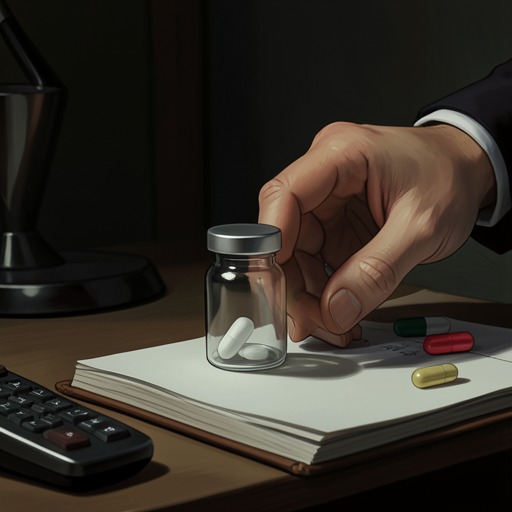
After the guests eat, several feel sick from the rich cake. Dora goes upstairs to rest and later searches for aspirin, believing she has misplaced the bottle she recently bought. The cheerful celebration becomes a crucial opportunity for someone to substitute poisoned tablets into the medicine kept near Letitia’s bed.
The day of Dora’s birthday
Letitia Changes Her Will
Letitia tells Phillipa that she has revised her will, leaving her estate to Phillipa after Dora’s provision. She says she is fond of Phillipa and wants to help her son, Harry, but hints that the inheritance could become much larger if [Belle Goedler](entity:character-recall-character-belle-goedler-5e4f092bca45) dies soon.
Phillipa is frightened rather than pleased by the offer. Julia overhears and accuses her of positioning herself to inherit, warning that she would become the first suspect if Letitia died. The conversation makes clear that several women have reason to fear how the approaching fortune will reshape their lives.
The morning after the birthday party
Dora Dies from Poisoned Aspirin
Dora is found dead in her bed after taking tablets she believed were aspirin. The doctor suspects narcotic poisoning; the remaining tablet from the bottle beside Letitia’s bed is sent for analysis and proves not to be aspirin.
The substitution appears intended for Letitia, but Dora took the poisoned tablets instead. The death transforms the investigation from a single suspicious shooting into a murder case and proves that the killer is still willing to strike inside the household.
After Dora’s death
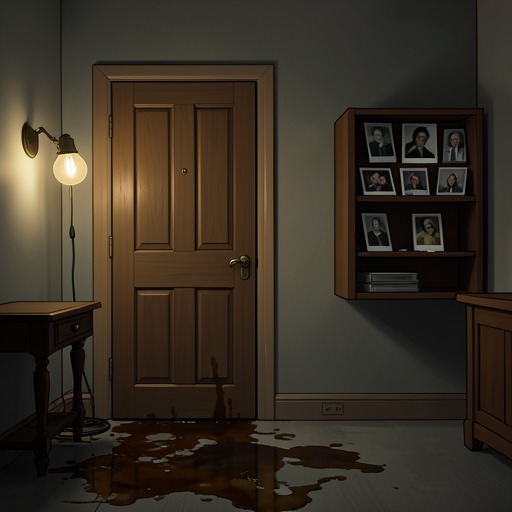
The Removed Photographs
Craddock questions Letitia about possible heirs and asks whether she would recognize Sonia. Letitia admits that thirty years have passed and agrees to find an old family album; when they examine it, the spaces for Sonia’s photographs are empty.
The photographs have been removed recently, suggesting that someone in the house is concealing a resemblance or an identity. Craddock searches the attic and finds letters Letitia wrote to her sister Charlotte, opening a new path into the sisters’ hidden past.
After Dora’s death
Phillipa’s Hidden Marriage History
Craddock confronts Phillipa with the truth that her husband, Ronald, deserted the Army rather than dying in Italy. Phillipa admits that she has not told her son the details, fearing the stigma, but denies meeting Scherz in the summerhouse.
Craddock suspects that the man [Mitzi](entity:character-recall-character-mitzi-3940081c7153) heard may have been Ronald, who could have returned seeking money. Phillipa’s silence is understandable but makes her harder to assess; her concealed past adds another apparent motive and another source of deception to the crowded investigation.
After Dora’s death
The Letters Reveal Charlotte
Craddock takes Letitia’s old letters to her sister Charlotte and shows one to [Jane Marple](entity:character-recall-character-jane-marple-a9e79c053cbb). The letter describes Sonia’s fierce temper, her engagement to [Dmitri Stamfordis](entity:character-recall-character-dmitri-stamfordis-7891ea853cb2), and her habit of closing and unclenching her hands when angry; it also recalls that Randall was making inquiries into Dmitri’s character.
Marple notices that the letter may connect to familiar behavior among the current residents, though she does not yet disclose a complete solution. The letters become a record of the past that can expose the false identity hidden beneath the name [Letitia Blacklock](entity:character-recall-character-letitia-blacklock-19ae43da95b5).
During the renewed investigation
The Revolver Is Missing
Colonel Easterbrook discovers that his unlicensed war-souvenir revolver has disappeared from his dressing-room drawer. Laura remembers seeing it only after the shooting, which briefly reassures him that it could not have been stolen before the crime.
His reasoning overlooks the uncertainty of memory, but the missing weapon gives the police a plausible source for the revolver found beside Scherz. Bunch also tells Craddock that the Colonel owned a gun, adding another detail to the chain of possible access.
After Dora’s death
The Shepherdess Lamp Clue
Marple examines the drawing-room lamp after recalling Dora’s confused remark that the shepherdess, rather than the shepherd, had been on the table during the shooting. The pair of electric lamps has been switched, and Dora had also mentioned Patrick handling an oily cup and feather in the shrubbery.
The altered lamp might explain how the lights were fused, but Marple cannot yet understand how the mechanism worked. The detail nevertheless links the blackout to a deliberate physical act in the room, rather than to a random failure of the old wiring.
During Craddock’s visit to the Vicarage
A Local Barter Network
Bunch explains that villagers quietly exchange butter, eggs, meat, and clothing during rationing, often avoiding direct mention of the arrangements to the police. A note from Letitia asking about a Thursday delivery proves to refer to this informal barter, not to a criminal conspiracy.
The discovery warns Craddock that apparently suspicious visits to [Little Paddocks](entity:location-recall-location-little-paddocks-9629829e7b95) may have innocent explanations. In a village where goods and gossip travel through unofficial channels, the same habit of secrecy can obscure both ordinary rule-breaking and genuine murder.
During the investigation, after Craddock’s Scottish visit
Ronald Haymes’s Death
[Rydesdale](entity:character-recall-character-rydesdale-36d87e82c0b3) tells Craddock that [Ronald Haymes](entity:character-recall-character-ronald-haymes-c811787dce3a), a deserter injured while rescuing a child from a lorry, has died in hospital without regaining consciousness. An old [Chipping Cleghorn](entity:location-recall-location-chipping-cleghorn-d9191f0f31e1) bus ticket and money were found on him, suggesting he had been in the area.
The timing clears Ronald of the shooting at [Little Paddocks](entity:location-recall-location-little-paddocks-9629829e7b95), because he was already hospitalized before the hold-up. His death also means Phillipa is free to marry again and need not fear that her husband will reappear, while Craddock considers what her secret might have led her to conceal.
After Ronald’s death, before the storm
Miss Murgatroyd Reconstructs the Blackout
At [Boulders](entity:location-recall-location-boulders-61bd0daa7c5f), [Miss Hinchcliffe](entity:character-recall-character-miss-hinchcliffe-ed2d3a47329e) has [Amy Murgatroyd](entity:character-recall-character-amy-murgatroyd-9e335ebeee9a) reconstruct the positions of the guests during the blackout. Hinchcliffe reasons that the attacker could have left through the second drawing-room door while the flashlight held everyone’s attention.
Amy struggles to remember, but Hinchcliffe guides her to distinguish the people she saw from the spaces the flashlight passed over. The exercise gives Amy access to an unrecognized visual memory and places her in danger as she approaches the crucial realization.
During the storm, later that afternoon
Amy Remembers an Absence
As [Miss Hinchcliffe](entity:character-recall-character-miss-hinchcliffe-ed2d3a47329e) leaves to collect a dog from the station, Amy calls after her that someone “wasn’t there.” The phrase refers not to one of the women being absent in a general sense, but to Letitia’s position by the archway: the space where she was supposedly standing when shot had been empty.
Before Amy can explain, someone approaches and strangles her with a scarf. Hinchcliffe returns with [Jane Marple](entity:character-recall-character-jane-marple-a9e79c053cbb) and finds her friend dead in the rain, realizing that Amy’s discovery has made her a target.
Immediately after Amy’s murder
Marple Interprets the Last Words
Xin Qikeli told Jane Marper that Amy had pointed out that one of the three women was not in the drawing room. Jane Marper asked where the stress was on that sentence and inferred that Amy was likely describing an empty spot, not a person's name. This distinction points to Let
The evening after Amy’s murder
Pip and Emma’s Identities Unravel
At [Little Paddocks](entity:location-recall-location-little-paddocks-9629829e7b95), a letter arrives from the real [Julia Simmons](entity:character-recall-character-julia-simmons-c696430ce793), announcing that she expects to visit. Letitia realizes that the young woman living in the house as Julia cannot be Patrick’s sister, and Patrick admits he brought a friend in her place as a lark while the real Julia pursued acting.
The impostor identifies herself as [Emma Jocelyn Stamfordis](entity:character-recall-character-emma-jocelyn-stamfo-6890de8af57d), one of the heirs known as [Pip](entity:character-recall-character-pip-adcf1b9353d3) and [Emma](entity:character-recall-character-emma-0b5c09f9ac66). She admits she came hoping to win Letitia’s favor and denies killing her, but says she has not seen her twin Pip since childhood. The revelation proves that the inheritance mystery is real while leaving Pip’s identity unresolved.
The evening after Amy’s murder
Phillipa Reveals She Is Pip
When Craddock arrives and asks where everyone has been, the false Julia corrects Patrick’s attempt to give a shared alibi. She admits returning earlier and walking alone, making herself a more complicated suspect rather than protecting her companion.
During the confrontation, Phillipa unexpectedly declares that she is [Pip](entity:character-recall-character-pip-adcf1b9353d3), the twin [Emma](entity:character-recall-character-emma-0b5c09f9ac66) has not seen since childhood. She explains that she came to England after becoming a widow, hoping for help with her son’s education, not to kill Letitia. Her confession removes a false assumption that Pip must be male and changes the list of possible heirs.
The evening after Amy’s murder
Edmund Is Accused
[Mitzi](entity:character-recall-character-mitzi-3940081c7153) enters during Craddock’s questioning and claims that she saw Letitia in the hall with a revolver behind Scherz. Craddock rejects the literal accusation and turns on Edmund, suggesting that he was [Pip](entity:character-recall-character-pip-adcf1b9353d3) and had fired the shots before returning to the room.
Edmund protests that his birth and education can establish his identity. Craddock’s accusation is a deliberate feint: by directing suspicion elsewhere, he creates a moment in which the real killer may believe Mitzi is the only witness who can expose her.
The evening after Amy’s murder
Marple’s Trap in the Kitchen
While Craddock confronts Edmund, [Mitzi](entity:character-recall-character-mitzi-3940081c7153) returns to the kitchen, where Letitia follows. [Sergeant Fletcher](entity:character-recall-character-sergeant-fletcher-18f9747f386a) waits nearby, and [Jane Marple](entity:character-recall-character-jane-marple-a9e79c053cbb) hides in a broom cupboard, prepared to intervene if the killer tries to silence Mitzi.
Letitia forces Mitzi’s head toward the sink, apparently believing that the girl has truly witnessed the shooting. Marple imitates Dora’s voice, calling Letitia by the intimate name “Lotty”; the sound breaks Letitia’s composure and releases Mitzi, while Fletcher steps in to stop the attack.
The evening after Amy’s murder
Charlotte Blacklock Is Arrested
Marple identifies the woman who has been living as [Letitia Blacklock](entity:character-recall-character-letitia-blacklock-19ae43da95b5) as [Charlotte Blacklock](entity:character-recall-character-charlotte-blacklock-882c6c590ac6), whose neck scar from a goitre operation has been hidden beneath the pearl choker. Fletcher arrests her after witnessing the attempt to drown [Mitzi](entity:character-recall-character-mitzi-3940081c7153), and the gathered household learns that the apparent victim is the murderer.
Charlotte weeps over Dora, insisting that she loved her, while Hinchcliffe struggles to reach the woman who killed Amy. Mitzi survives and quickly begins to describe herself as a heroic police helper, adding a comic note to the grim arrest.
After the arrest
The Sisters’ Identity Exchange
At the Vicarage, Marple and Craddock reconstruct the history behind the impersonation. Charlotte had developed a goitre as a young woman, and her tyrannical father discouraged the operation that eventually removed it; Letitia gave up her career to take her sister to Switzerland for treatment.
When Letitia later died of pneumonia, Charlotte assumed her identity. The sisters had lived and worked together for years, looked sufficiently alike, and were known to few people who could distinguish them. Charlotte’s false life was sustained by borrowed memories, Letitia’s old letters, and the assumption that one elderly woman could be mistaken for another.
After the arrest
The Real Motive for Scherz’s Death
Marple explains that Scherz had once been an orderly at the clinic where Charlotte was treated for goitre. He recognized her at the hotel, making him a potential threat to the identity she had built; she feared that he might later realize he could exploit her secret.
Charlotte paid him to advertise and perform a sham hold-up, without telling him that she intended to kill him. She used the gathering as cover to shoot him and make the death look like a botched robbery or suicide, protecting her claim to the inheritance and eliminating the one person who could identify her as Charlotte.
After the arrest
The Blackout Was Engineered
Craddock and Marple explain that Charlotte had prepared the shepherdess lamp by fraying its cord, then used water from the vase of violets to short the wiring as the clock chimed. The brief electrical failure created the darkness needed for the staged entrance and concealed her movement.
She had arranged for the second drawing-room door to be oiled so she could leave and return without being heard. The switched lamps and the dead violets were clues to the mechanism, while Dora’s observation that Letitia picked up the vase was accurate even though her explanations were often confused.
Friday, October 29, 6:30 p.m., reconstructed after the arrest
Charlotte Shoots Scherz
During the blackout, Charlotte slipped through the oiled second door while Scherz performed the sham hold-up. She fired two shots toward the wall beside the position where she was supposed to be standing, then shot Scherz at close range as he turned in alarm.
She dropped the revolver beside his body, returned through the hidden route, and cut her own ear to produce convincing blood. The apparent victim’s wound, the dead intruder, and the weapon at his side together created the false story that Scherz had fired at her and then killed himself.
The day before Dora’s death, explained after the arrest
Dora’s Poisoned Birthday
Charlotte poisoned tablets in the aspirin bottle beside her bed, expecting the medicine to be taken by Letitia. Dora had misplaced her own new bottle and used the tablets instead, dying after the birthday celebration.
Marple concludes that Charlotte gave Dora a happy final day, then disguised the poisoning as an attempt on herself. Charlotte’s kindness toward her friend was genuine, but she used that affection to soften the appearance of a deliberate murder and to convince herself that Dora’s death was almost merciful.
The afternoon of the storm, explained after the arrest
Amy’s Murder to Silence Her
Charlotte overheard Hinchcliffe and Amy reconstructing the shooting and realized that Amy had noticed Letitia’s position was empty at the moment the shots were fired. As Hinchcliffe drove away, Charlotte strangled Amy before she could explain the discovery to anyone.
The crime was hastier and less carefully staged than the shooting or Dora’s poisoning. Amy’s death shows how fear had overtaken Charlotte’s remaining judgment: every new witness threatened the false identity and the fortune she had come to regard as compensation for a life of suffering.
After the arrest, at the Vicarage
Marple Explains the Clue List
Marple explains the notes she made before disappearing: the lamp and violets pointed to the blackout; the aspirin and [Delicious Death](entity:expression-recall-expression-delicious-death-66899a620113) to Dora’s poisoning; and the phrases about affliction, iodine, pearls, and Letty connected Charlotte’s illness and hidden scar to the false identity.
The references to [Berne](entity:location-recall-location-berne-5efa3f3e6bba) and old-age pensions helped complete the pattern: Scherz had known Charlotte at the clinic, while Marple’s memory that one elderly woman can be mistaken for another illuminated the sisters’ exchange. The different spelling of “inquiries” in Letitia’s old letter and Charlotte’s later note also suggested that the writer had changed.
Evening after the arrest
The Household Learns the Full Story
At the Vicarage, Marple, Craddock, Bunch, Julian, and the younger residents discuss the investigation’s resolution. Phillipa and [Emma](entity:character-recall-character-emma-0b5c09f9ac66) inherit the Goedler fortune, while Edmund and Phillipa’s relationship moves toward marriage; Patrick’s hopes of a wealthy match with Emma are rejected.
The survivors return to ordinary plans and teasing, but the account leaves the moral cost in view. Charlotte had been affectionate and frightened, yet her sense that life owed her a fortune allowed her to kill those closest to her, and Dora’s loyalty could not protect her from the secret she shared.
After the honeymoon
The Gazette Is Refused
After returning to [Chipping Cleghorn](entity:location-recall-location-chipping-cleghorn-d9191f0f31e1) from their honeymoon, Edmund and Phillipa visit the stationer to order newspapers. They choose several titles but firmly decline the local Gazette, the paper whose personal column carried the advertisement that drew the village to [Little Paddocks](entity:location-recall-location-little-paddocks-9629829e7b95).
The stationer’s wife assumes that everybody wants the Gazette and adds it to their order regardless. The final joke restores the village’s appetite for local news, even after the newspaper’s most sensational notice has brought murder into its everyday routine.